How I designed and vibe coded a restaurant booking SaaS on my own
By El Mamoune El Baraka, product designer.
Short answer
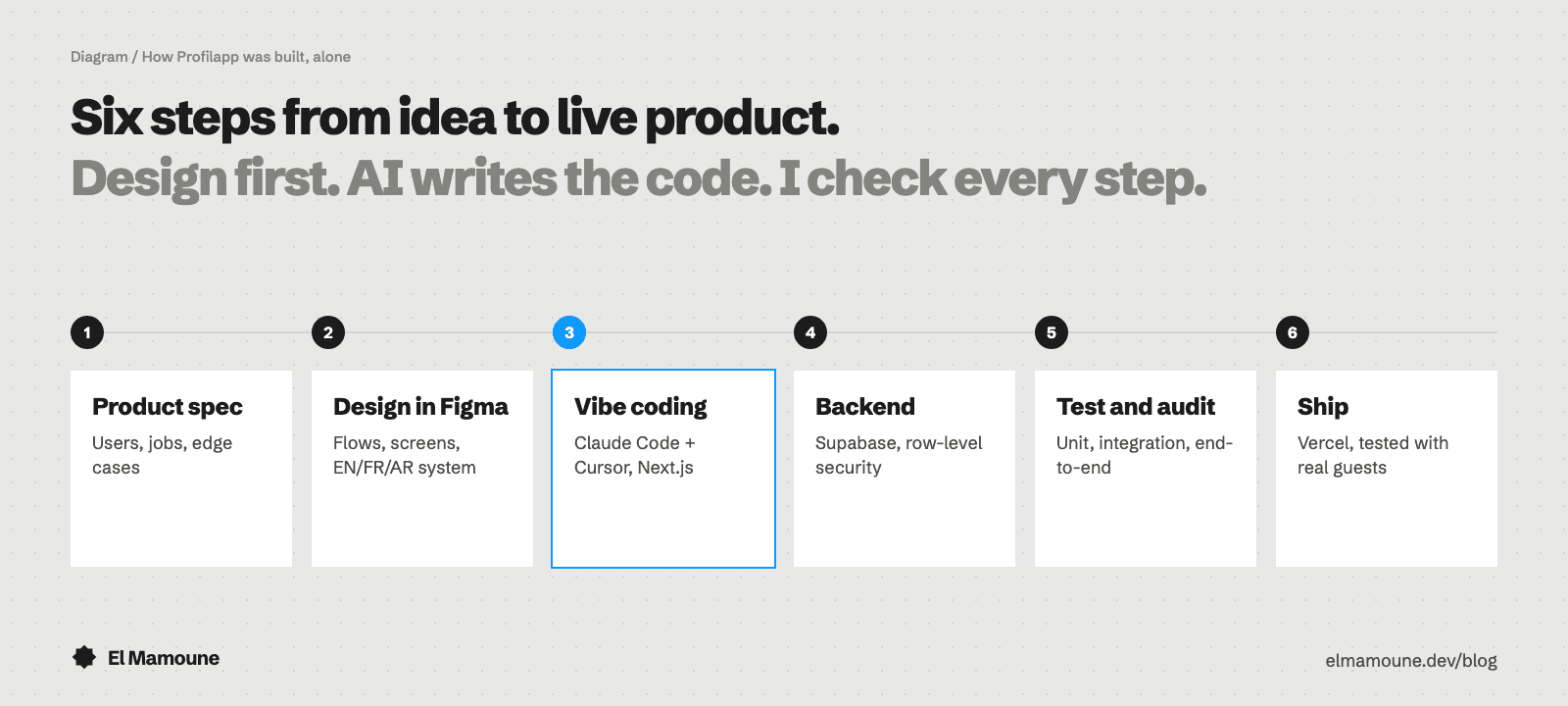
- Profilapp is a booking page and dashboard for restaurants. I designed it in Figma and built it with Claude Code and Cursor on Next.js, Supabase and Vercel.
- The design work came first and did most of the heavy lifting: a written spec, flows, then a design system that holds in English, French and Arabic.
- AI tools made the build possible for a designer working alone. Product decisions, testing with real users and reviewing what the AI wrote were still my job.
The problem
The restaurants I talked to were taking bookings by phone and WhatsApp, then losing track of them. Guests sent a message, waited for a reply, and sometimes showed up to a table nobody had written down.
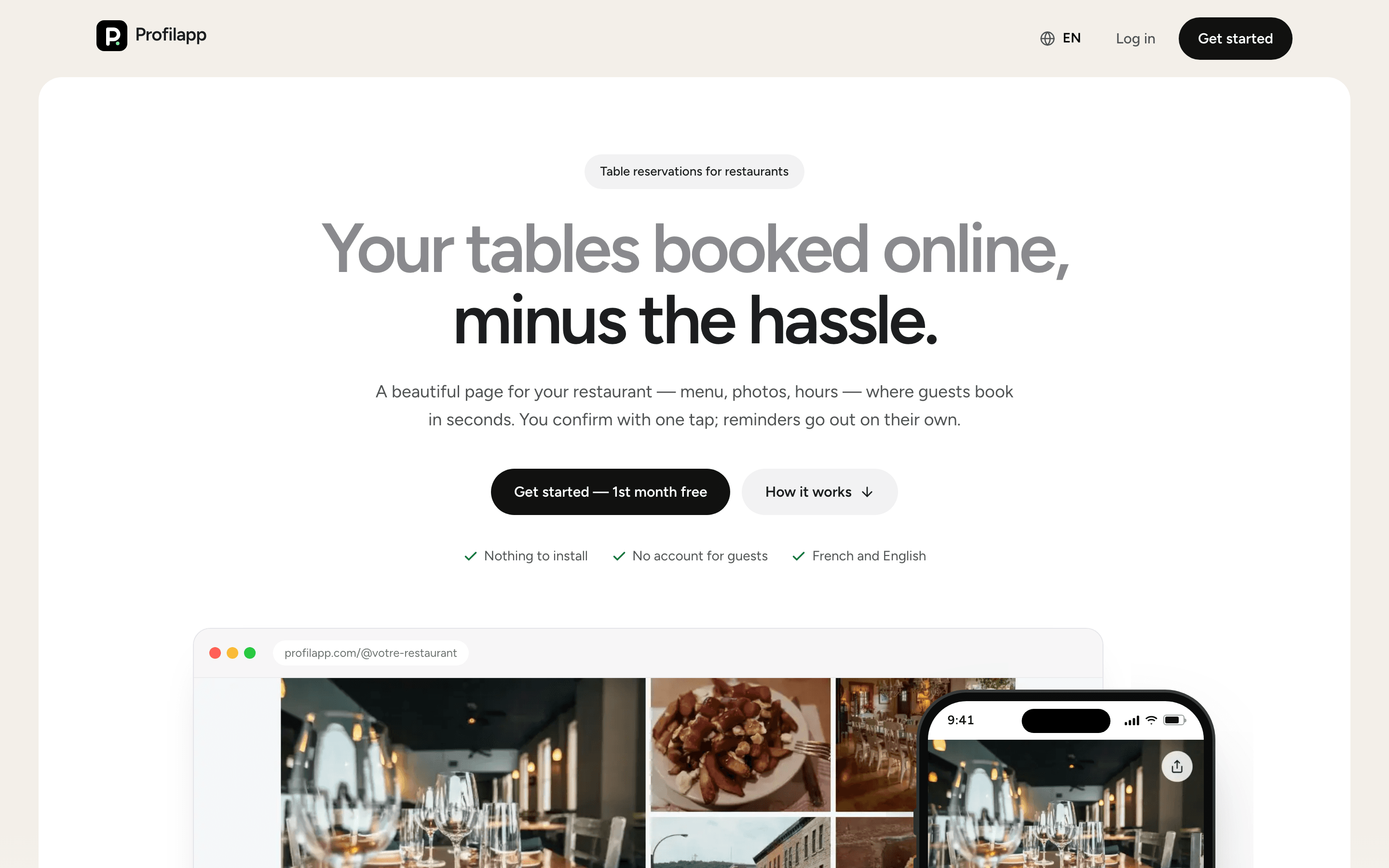
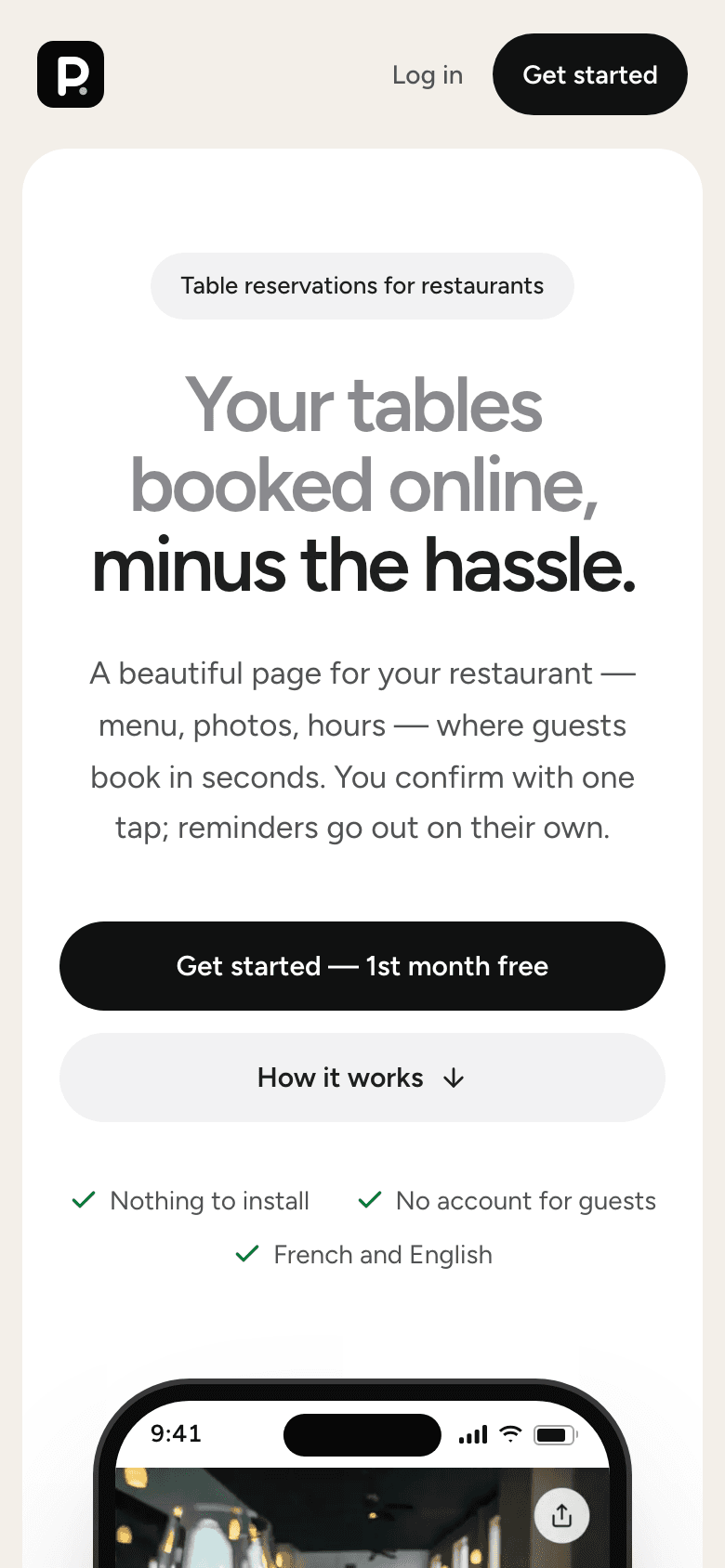
Profilapp gives each restaurant one page with its menu, photos and hours, where a guest can book a table in seconds, and a dashboard where the owner confirms it in one tap.
Step 1: a spec before any pixel
I wrote down who uses the product, what each of them is trying to get done, and the edge cases: a full night, a party of twelve, a guest who books from inside Instagram's browser, a restaurant with two branches.
This document turned out to be the most useful thing I made. It became the brief for the design, and later it was the context I gave the AI coding tools.
Step 2: design in Figma
I started with wireframes of the two main flows, the guest booking and the owner confirming it, and only then moved to high-fidelity screens.
The hardest design constraint was language. Many guests in Morocco switch between French, Arabic and English, so the design system had to work left to right and right to left without a second set of screens. Building components with CSS logical properties instead of left and right is what made that possible.
- Booking made for phones and in-app browsers, with no account needed for the guest.
- An owner dashboard where a reservation is confirmed in one tap and reminders go out on their own.
- Multi-branch restaurants, table plans and capacity rules.
- One set of components for English, French and right-to-left Arabic.
Step 3: vibe coding the build
I'm a designer, not a full-time engineer. I built Profilapp in React and Next.js with AI coding tools, mostly Claude Code and Cursor, working from the spec and the Figma screens.
The approach that worked was small, specific requests: one screen or one rule at a time, checked in the browser before moving on. Asking for a whole feature at once produced code that looked right and broke on the edge cases from step 1.
The backend is Supabase: Postgres, authentication, file storage, row-level security so one restaurant can never read another's bookings, and scheduled jobs for reminders.
Step 4: test, audit, ship
Before launch I added unit, integration and end-to-end tests, and ran security and UX audits on the main flows. The app is live on Vercel and installable as a PWA.
Then I tested it with a real restaurant owner and their guests. Watching a guest book from a phone in a noisy room taught me more than any review in Figma.
What AI did and didn't do
AI tools wrote most of the code and saved me months. They did not decide what to build, which edge cases mattered, or whether a screen was clear to a tired restaurant owner at 9pm. That part is product design, and it is still the part that decides whether a SaaS works.
If you're a founder, this is the useful takeaway: a designer who can vibe code can now hand you a working prototype you can put in front of users, not just a Figma file. I turned the lessons into 12 vibe coding best practices, with templates and a launch checklist, and you can see the finished product in the Profilapp case study. I also compared the Profilapp landing page with Stripe, Notion and Linear in 8 SaaS landing page examples.
Questions people ask
- What is vibe coding?
- Building software by describing what you want to an AI coding tool, such as Claude Code or Cursor, and reviewing and testing what it produces, instead of writing every line by hand.
- What stack is Profilapp built on?
- Next.js and React with TypeScript and Tailwind, Supabase for the database, auth and storage, and Vercel for hosting.
- Can a product designer build a SaaS alone with AI?
- Yes, for a prototype or a first version, if the design and the spec are done properly first and every step is tested. Complex products still benefit from an experienced engineer reviewing the code. My vibe coding best practices cover when to bring one in.
Vibe coding your SaaS? Send me the link.
I'll reply with a free 5-minute video of what I'd fix first in the design and the flows.
hello@elmamoune.dev